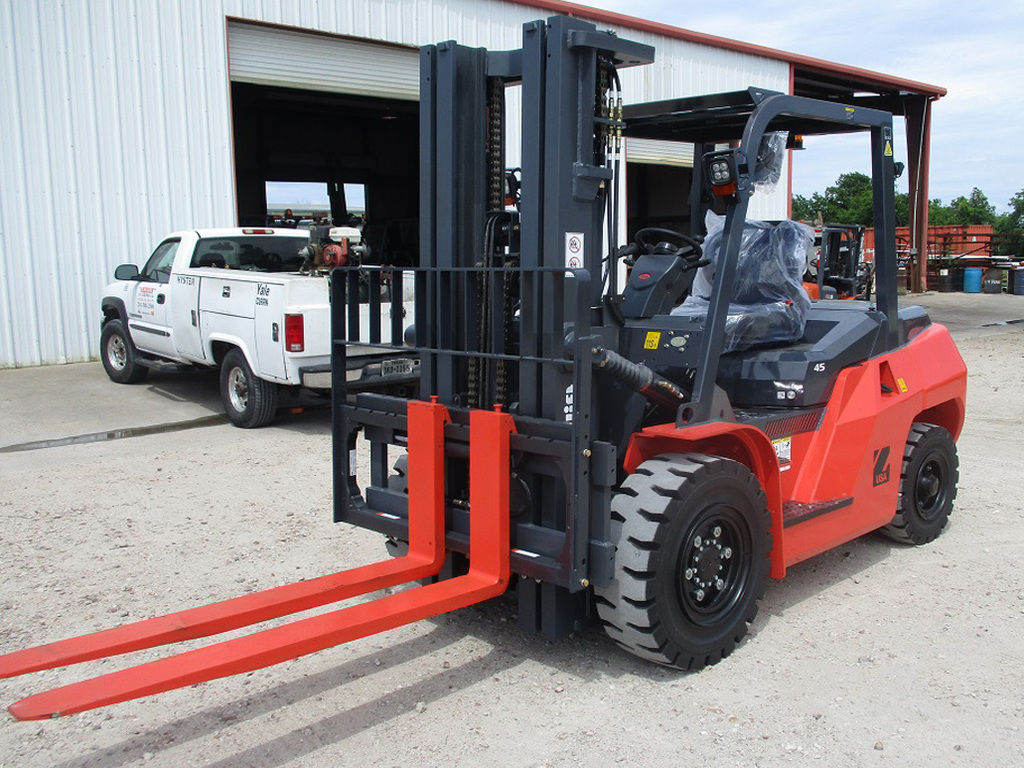
Forklifts can differ in far more than lifting capacity. Load center, lift height, mast configuration, power type, tires, and attachments all affect how a truck fits a particular job. The right choice depends on what you're lifting, how high you need to lift it, where the forklift will work, and the conditions it will face.
If you're searching for “what forklifts are for sale in Houston?”, you’ll find plenty of models that look pretty similar at first. The numbers tell a different story. Capacity, load center, lift height, mast setup, power type, tires, and attachments can all change how a forklift works on a real job.
That’s why the biggest capacity number on the page shouldn't be the thing that makes the decision. Two forklifts can lift roughly the same weight and still be a poor match for the same job. That part gets overlooked a lot.
Start with the load, not the model name
A 5,000-pound capacity rating doesn't mean you can put any 5,000-pound load on the forklift and call it good. The load center matters. So does the height you're lifting to. OSHA's forklift guidance explains that rated capacity is based on the conditions shown on the truck's nameplate, including the load center and maximum height. The size and position of the load can change what the truck can safely handle.
This is where two forklifts with similar capacity ratings can start looking very different. Say you're moving a compact pallet that stays close to the forks. Then compare that with a long load that extends farther out. The weight might be the same. The load center isn't.
So when we talk with a customer about “what forklifts are for sale in Houston?”, we don't want only the weight of the heaviest load. We want to know what that load actually looks like.
Lift height can change the forklift you need
A forklift that only needs to move pallets around a loading area doesn't have the same job as one that has to put those pallets into tall storage racks. The required lift height affects the mast configuration. Then there's the building itself.
- How much clearance is above the forklift?
- How high are the doors?
- Are there low beams, sprinklers, lights, or other equipment in the way?
These aren't exciting questions. They're the ones that can save you from finding out later that the truck you picked doesn't fit where you planned to use it.
Our current Tailift inventory includes trucks with different mast and capacity configurations. For example, the site currently lists a Tailift PFG25P with a three-stage mast rated at 86 inches collapsed and 189 inches raised. That's a very different setup from simply saying “5,000-pound forklift.”
Power type matters too
Power type is another place where forklifts that look alike can be quite different. We currently have LPG and diesel Tailift options in our inventory, along with other equipment categories. Think about where the truck will actually spend its day.
An indoor warehouse has different concerns from an outdoor yard. The surface matters. So does how the equipment will be fueled or charged and how often it will be used. You don't need to make this more complicated than it is. Tell us where the forklift will work and what you're moving. That gives us something useful to work with.
The tires and attachments aren't small details
Tires can change the way a forklift handles a particular work area. A truck working on a smooth warehouse floor doesn't face the same conditions as one working outside. Attachments can change things even more.
A sideshifter, for example, lets the forks move from side to side. Other attachments are built around specific loads. The Occupational Safety and Health Administration (OSHA) points out that attachments can affect capacity, visibility, and the truck's center of gravity. The attachment itself also adds weight.
So if you already know you need an attachment, tell us before choosing the forklift. Don't buy the truck first and figure out the attachment later. OSHA also requires modifications or additions that affect capacity or safe operation to have the manufacturer's prior written approval.
What should you actually compare?
When someone asks us “what forklifts are for sale in Houston?”, we usually need more information before a model makes sense.
Start here:
- What is the heaviest load?
- What does the load look like?
- How high does it need to go?
- Where will the forklift operate?
- What type of surface will it travel on?
- Do you need an attachment?
- Are there height or width limits in the work area?
That's enough to get a real conversation started.
At American Lift & Equipment, Inc., we help customers compare equipment against the work they need to get done. We carry Tailift equipment, along with Master Craft, Snorkel, and Xtreme products. Our current inventory includes different capacities, power types, and configurations, so the job matters when we narrow down the choices.
We're also an authorized Tailift dealer serving the Greater Houston area, and we serve Beaumont as well. And if you're looking for forklift parts in Houston, our parts department carries parts and accessories and can also source items that aren't in stock.
Don't compare forklifts by capacity alone
The capacity number is easy to spot. It's also easy to overvalue. Look at the whole setup instead. A 5,000-pound forklift with the right mast, load center, tires, and attachment can make more sense for one job than a larger truck that wasn't chosen around the actual work. That's really the point.
If you're trying to figure out “what forklifts are for sale in Houston”, start with your loads and work area. Then compare the equipment that fits those requirements. We can help you go through the options at American Lift & Equipment, Inc. Request a quote, ask about a demo, or talk with our team about what you're moving and where you're moving it.
Frequently Asked Questions
Can I choose different fork lengths?
Yes. Fork length should match the truck and the loads you're handling. Tell us the load dimensions before choosing the configuration.
Does forklift width matter if the capacity is right?
Yes. The truck still has to fit through your doors, aisles, and other restricted areas.
Does turning radius matter?
Yes. It can make a noticeable difference when the forklift has to work around racks, walls, or other equipment.
Can I use different attachments on the same forklift?
Some trucks can use different attachments. Each setup has to be suitable for that truck and its rated capacity.
Should I check the nameplate before using a forklift?
Yes. OSHA requires the nameplate to be legible and operators need to understand the listed specifications and capacity of trucks.