The best forklift for warehouse operations isn't determined primarily by lift capacity or brand reputation. It's determined by aisle width. Standard counterbalance forklifts need wide aisles to turn, reach trucks operate in mid-range aisles, and very-narrow-aisle (VNA) forklifts are purpose-built for the tightest racking layouts.
Search what is the best forklift for warehouse operations and most results lead with lift capacity, engine type, or brand comparisons. Almost none of them start with the measurement that actually determines which forklift a facility can use in the first place: the width of its aisles. That's backwards. A forklift's suitability for a warehouse isn't really a product question. It's a geometry question, and the racking layout already answered it before anyone started comparing models.
The Question Nobody Asks First
Ask a warehouse manager what the "best" forklift is, and the answer usually starts with what the forklift needs to do: how much weight, how high, how often. Rarely does the conversation start with how wide the aisles actually are. But aisle width isn't a preference. It's a hard constraint. A forklift that can't physically turn within the aisle it's assigned to isn't a good forklift for that warehouse, regardless of its capacity rating.
How Aisle Width Maps to Forklift Class
Every forklift type is engineered around a specific turning radius, and that turning radius sets the minimum aisle width it can operate in safely.
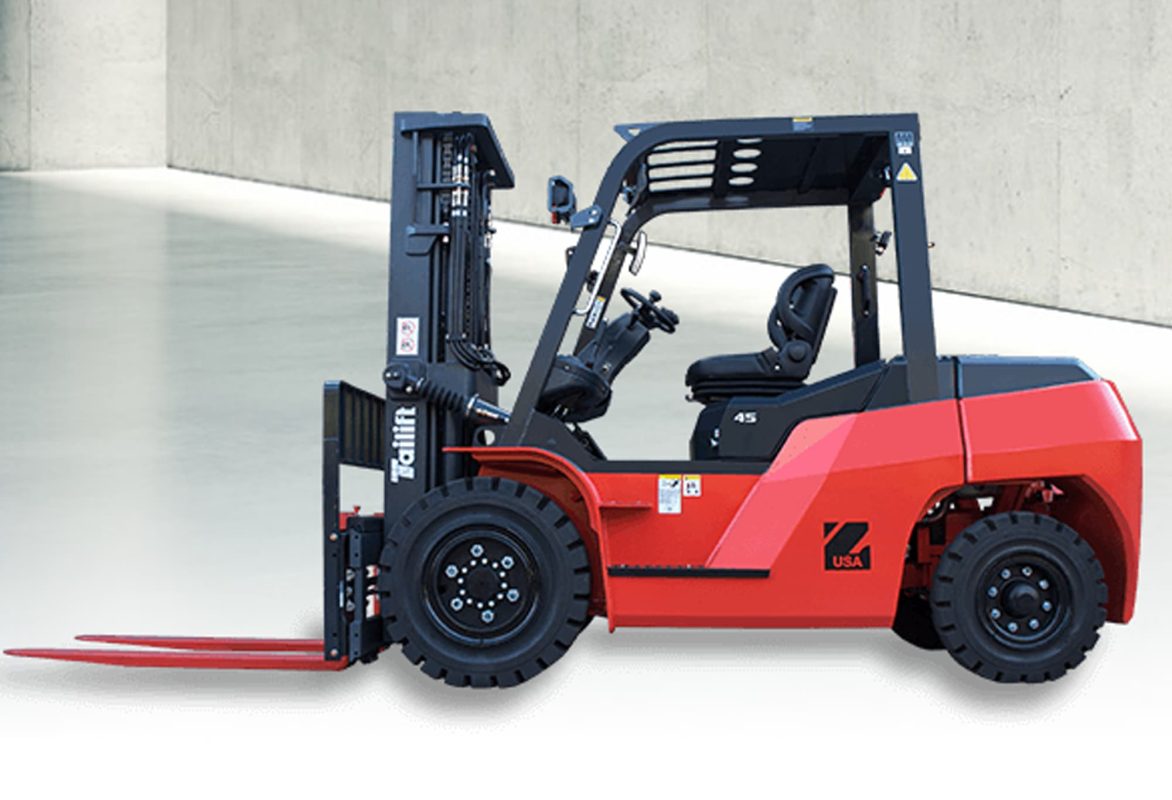
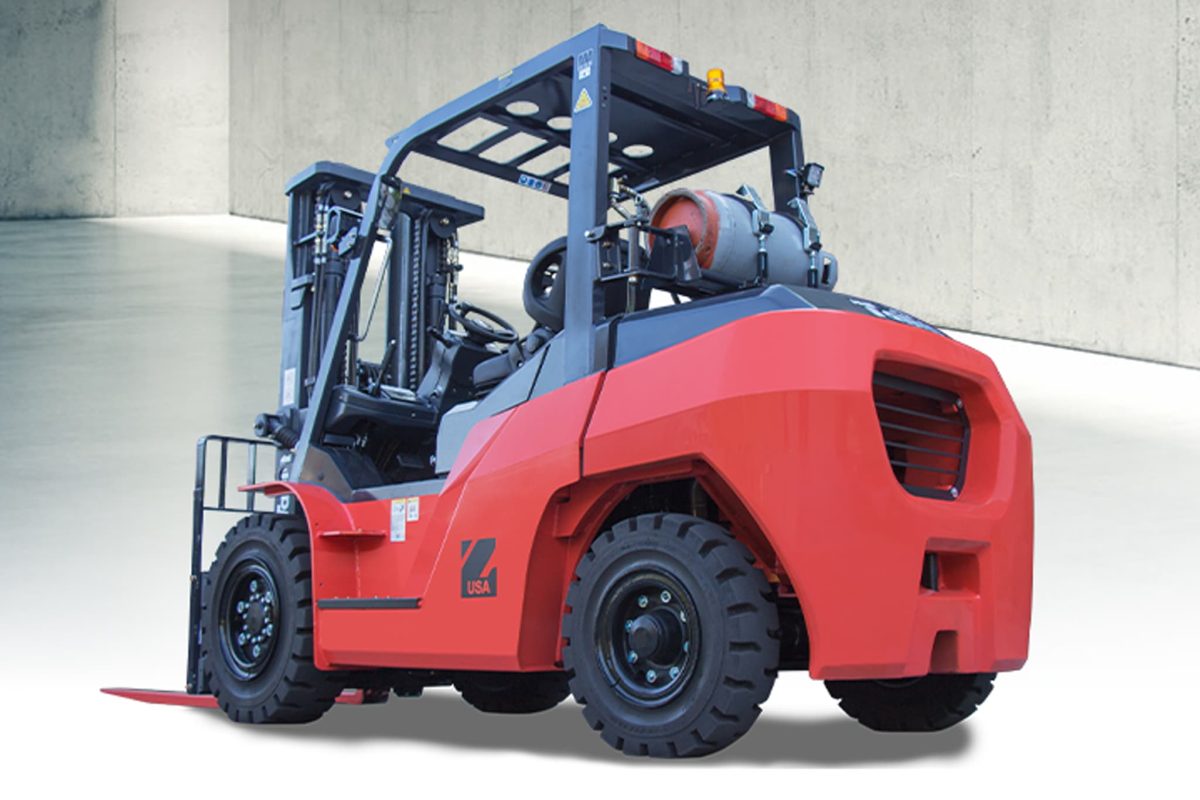
Standard counterbalance forklifts need the most room, roughly 12 feet or more, because the rear counterweight and the turning geometry of the mast require space to carry a load through a turn.
Reach trucks narrow that requirement considerably, generally operating in the 8- to 10-foot range, by using a lift mechanism that extends the forks toward the load rather than pivoting the whole truck into position.
Very-narrow-aisle (VNA) forklifts, including turret trucks and swing-mast models, are built for aisles as tight as 5 to 6 feet. They trade outside-the-rack maneuverability for storage density, since narrower aisles mean more racking fits into the same floor space.
A Scenario That Plays Out More Often Than It Should
A warehouse redesigns its racking layout to squeeze more storage into the same footprint, tightening aisle widths to gain density. The racking gets installed. The forklifts don't change. The facility keeps running the same standard counterbalance units it had before.
The result is a mismatch: equipment that physically can't complete a turn in the new aisle width, forcing awkward multi-point maneuvers, slower cycle times, or contact with racking that wasn't accounted for in the redesign.
This isn't hypothetical. It's one of the more common operational gaps warehouses hit after a layout change, precisely because the racking decision and the equipment decision get made by different people, at different times, without the aisle-width constraint carried through to both.
The Trade-Off That Comes With Going Narrower
Tighter aisles and narrower-aisle equipment aren't a strictly better upgrade. Narrow-aisle and VNA forklifts cost more upfront than standard counterbalance units, and they require more specialized operator training, since the machines handle differently and often run on guided or semi-guided navigation inside the aisle.
The right choice isn't "go as narrow as possible." It's matching the forklift class to the aisle width the facility has actually committed to, then weighing that against throughput needs, budget, and a realistic operator training timeline.
Most Warehouses End Up With a Mixed Fleet
The other thing the "best forklift" framing misses: very few facilities run one type of truck. A reach truck in the racking aisles and a counterbalance unit on the dock and in the yard is a normal, efficient setup, not a compromise.
That has two practical consequences. First, service matters more than brand loyalty, because a mixed fleet means a mixed-make fleet, and equipment that sits waiting on parts costs more than the price difference between brands. Second, rentals are often the right answer for the second or third truck. Project work, seasonal volume, and breakdown coverage don't justify a capital purchase.
A Practical Starting Checklist
Before comparing forklift models or brands, a warehouse should be able to answer:
- What is the facility's actual current aisle width, measured directly rather than estimated from memory or old blueprints?
- Is a racking redesign planned that would change that width in the near future?
- How much of daily operation happens at height versus ground-level movement?
- What's a realistic training timeline for operators if narrow-aisle or VNA equipment is on the table?
The Takeaway
There's no single answer to what is the best forklift for warehouse operations that applies across every facility. There's a best forklift for a specific warehouse's aisle width, storage layout, and throughput needs. Measure the aisle and confirm any planned racking changes before comparing brands or capacities, and the decision turns into a fit question instead of a guessing game.
Not sure what your layout can actually accommodate? American Lift & Equipment will measure it. We've been sizing, servicing, and refurbishing material handling equipment out of Alvin since 1989, for Houston, Beaumont, and Galveston operations running every make on the market. Call (281) 388-2500 for a free on-site needs assessment.
Frequently Asked Questions
What is the best forklift for warehouse operations?
It depends primarily on aisle width. Standard counterbalance forklifts suit wider aisles, reach trucks handle mid-range widths, and VNA forklifts are built for the tightest racking layouts. No single model is best for every warehouse.
How narrow can a warehouse aisle be with the right forklift?\
Very-narrow-aisle forklifts can operate in aisles as tight as 5 to 6 feet, compared to 12 feet or more for standard counterbalance units.
Does a narrower aisle always mean better storage efficiency?
Generally yes for density, but narrower-aisle equipment costs more and requires more specialized operator training. It's a trade-off, not an automatic upgrade.
Should aisle width be decided before or after choosing a forklift?
Aisle width and racking layout should be finalized first. Choosing a forklift before confirming actual aisle width often leads to equipment that doesn't fit the space efficiently.
Can one warehouse use different forklift types for different areas?
Yes, and most do. A reach truck in narrow racking aisles and a counterbalance forklift for dock and yard work is a common setup.
Do I need a different dealer for each brand in a mixed fleet?
No. Some dealers service all makes regardless of what they sell, which matters more than brand loyalty when uptime is the priority.