Adding a production line looks simple on a floor plan. Then the practical questions show up. Where do finished pallets stage? How many lift trucks does second shift need? Who gets parts to you when a truck goes down in week three?
We hear these questions from plant managers and operations leads across Houston, Beaumont, and Galveston. The expansions that go well usually plan the moving side of the project early, not after the new machines are already bolted down. Here is how we suggest approaching your manufacturing material handling equipment.
Start With Material Flow, Not an Equipment List
Walk the path your product takes, from receiving dock to shipping door. Note where raw material enters, where work-in-process waits, and where finished goods stage. Every handoff is a place where a pallet sits, a truck idles, or an operator walks farther than needed.
Then gather the details that drive equipment choice:
- Load weight, dimensions, and load center for each product
- Peak pallets per hour, not the monthly average
- Aisle widths, door heights, and turning space
- Floor condition and slab capacity, since heavier trucks put more stress on concrete
- Whether loads move by pallet, crate, coil, drum, or roll
A truck rated for 5,000 pounds at a 24-inch load center will not lift the same weight when the load is 48 inches deep. Details like this are easy to miss on a quote and expensive to find on the floor.
Match Lift Trucks to Each Work Zone
One truck rarely fits every zone. The dock may need pneumatic tires for rough pavement, while the production floor calls for a tighter turning radius on smooth concrete. Racked storage adds mast height and aisle width to the decision.
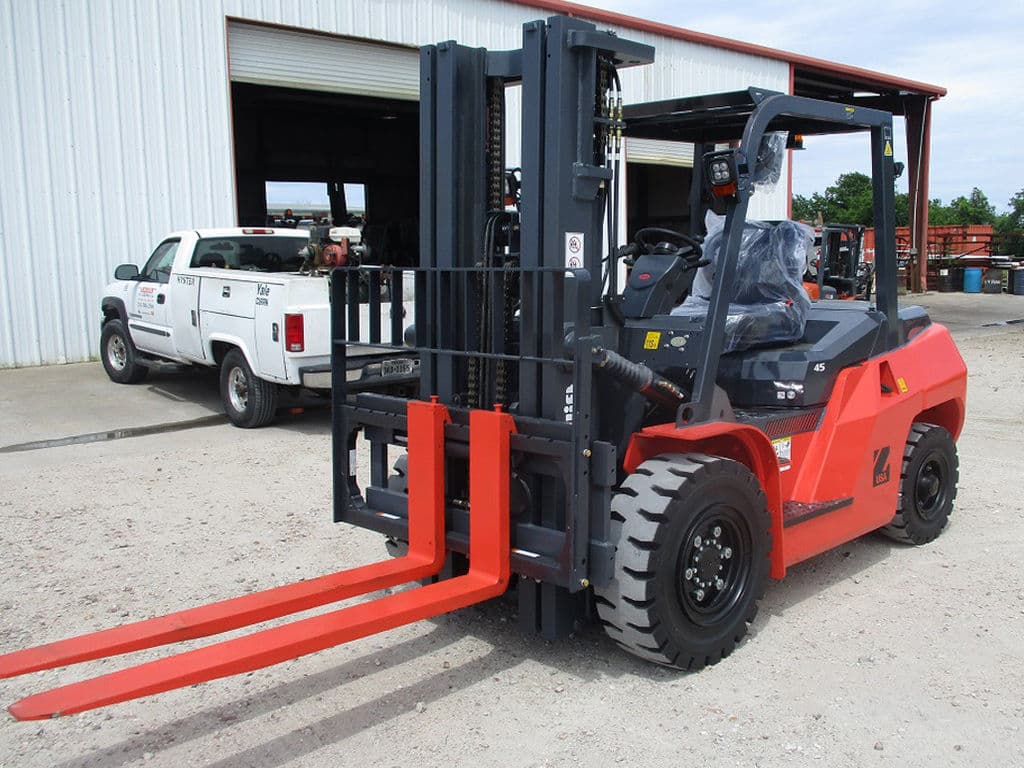
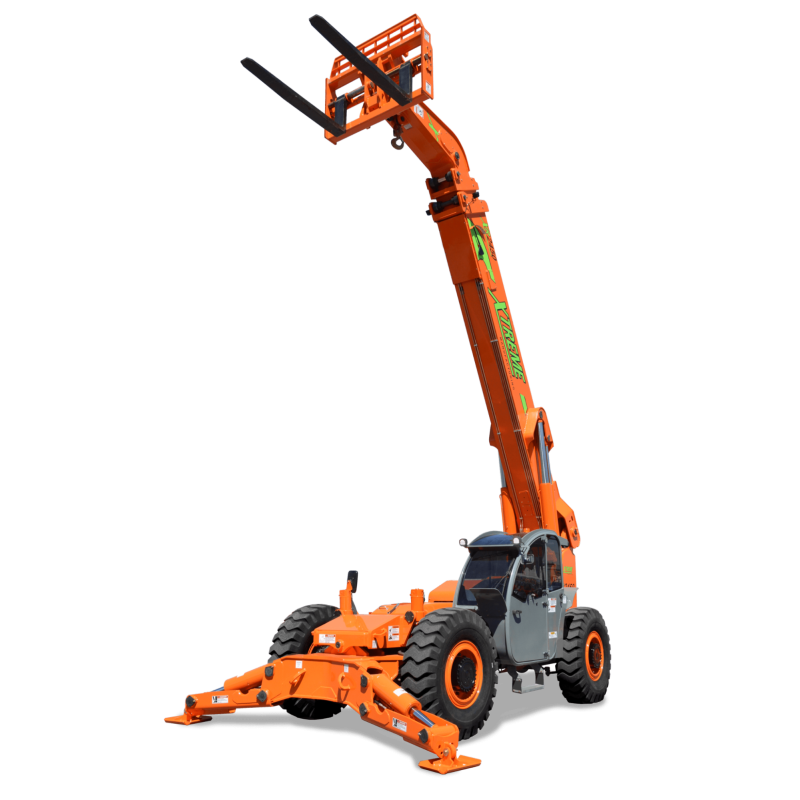
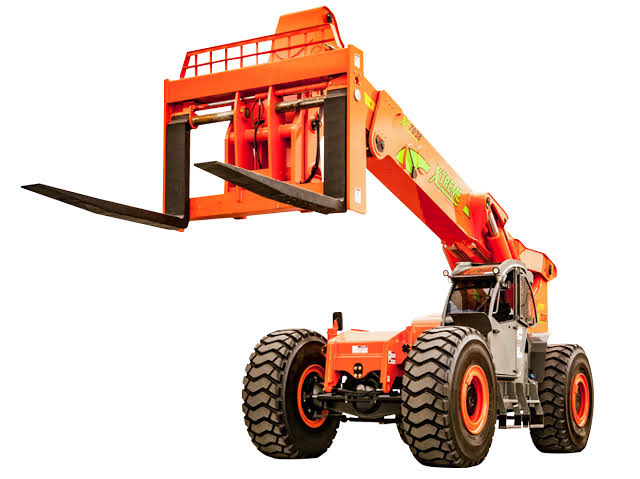
For indoor production and warehouse areas, electric forklifts often make sense for Houston facilities because of quieter operation, no exhaust and lower energy cost per hour. Outdoor yards and uneven ground may point toward rough terrain machines or telehandlers, which we carry through Snorkel and Xtreme.
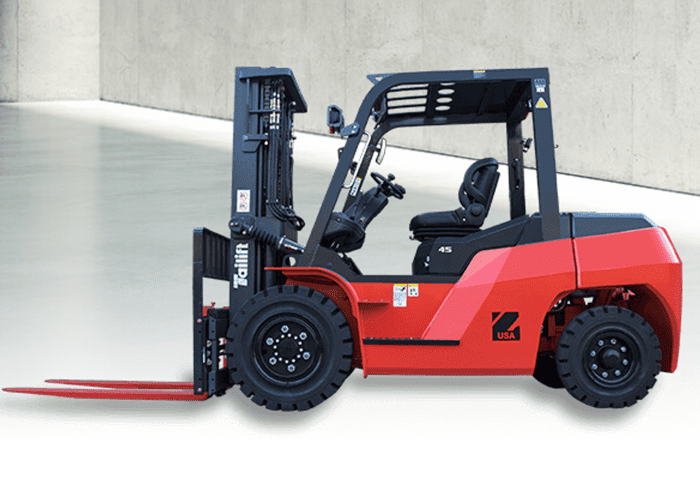
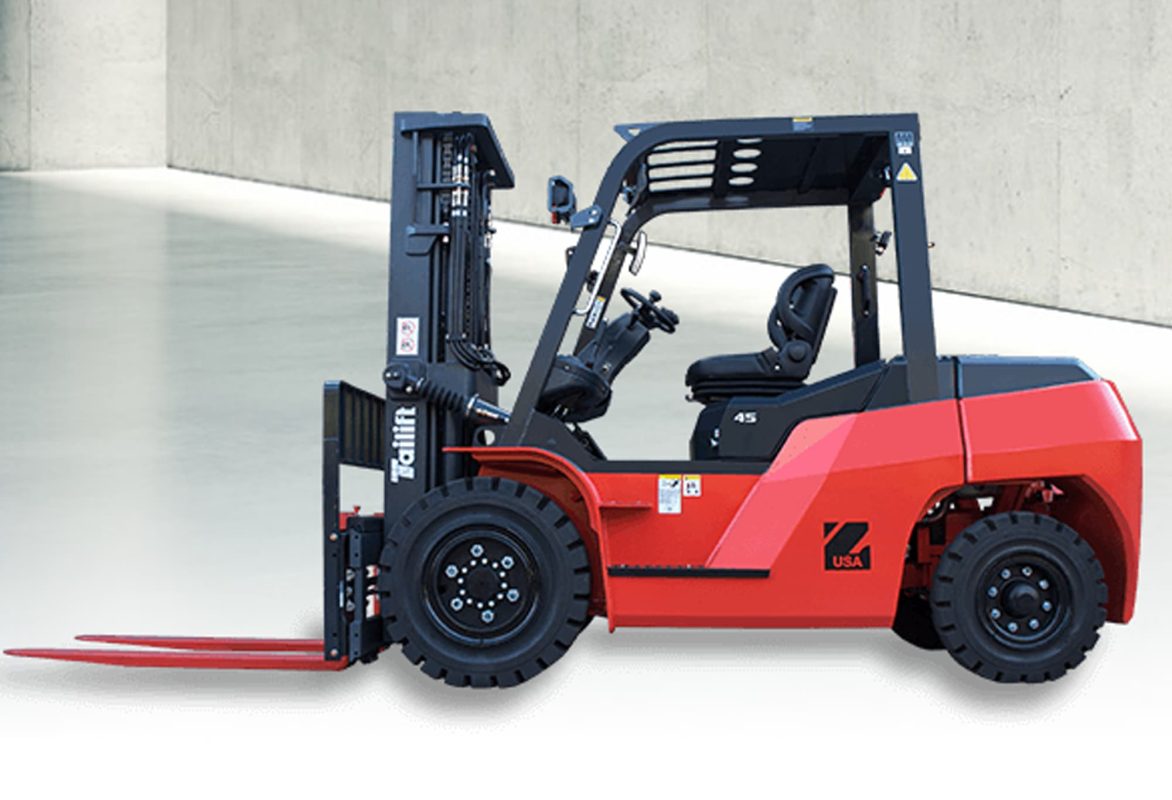
Tailift’s NEW ENERGY PFB 40 to 55 models are another option worth considering for warehouse applications that require higher lifting capacities. These models use lithium batteries, similar to four-wheel electric forklifts, while offering greater lifting capacity for heavier loads. The new models are expected to become available early next year, giving manufacturers another option when planning equipment for an expanding production line.
Attachments deserve a spot on the plan too. Side shifters, fork positioners, and clamps can remove handling steps that otherwise repeat hundreds of times a shift.
Size for the Full Line, Then Add a Cushion
Plan for the line at full production, not first-month volume. If two stations share one truck, a queue forms, and queues slow everything behind them. Count trucks by shift, and think through what happens when one is out of service.
Budgeting for manufacturing material handling equipment works best when you separate what you need permanently from what you need temporarily. Startup weeks, seasonal peaks, and the gap before a purchase order arrives are good candidates for forklift rental Houston operations can use without committing capital up front. Our rental fleet helps cover that gap while permanent equipment is on order.
Where Expansion Timelines Slip
Most delays have little to do with the machines themselves. They come from sourcing and communication. A request lands in a regional queue. The person answering hasn’t seen your floor. A delivery date moves a week, then another, and a line that was ready to start sits idle with a crew waiting. Overtime and missed shipments follow.
Large national dealers fit some buyers well. But a plant on a tight startup schedule often needs a direct line to someone who knows the account and can respond the same day.
How We Work Differently
At American Lift & Equipment, Inc., sales, parts, and service sit under one roof in Alvin, so the person who helps you spec a truck works down the hall from the people who support it. Our master mechanics review configurations with the sales team before an order is placed, which helps catch mismatches such as the wrong mast, tires, or capacity early.
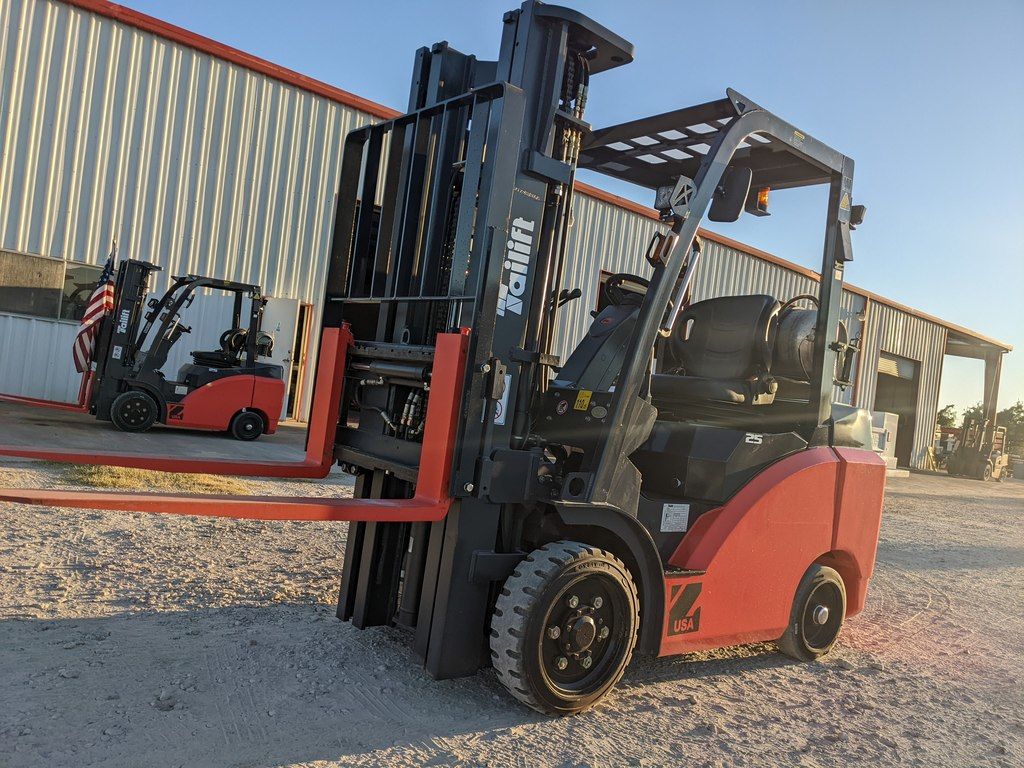
We are the only authorized Tailift-USA dealer in the Houston area. Tailift forklifts are backed by Toyota Industries Group engineering, and we stock parts locally, designed to help reduce the waiting that stalls a line. Same-week availability is possible on many in-stock units when timing allows. You can see current options in our full inventory and our new equipment listings.
Planning for support matters too. If you’re researching forklift service Houston options for a new line, ask where technicians are based and which parts sit on the shelf before you buy.
Questions to Ask Before You Choose a Supplier
Any supplier of manufacturing material handling equipment should be able to answer these plainly:
- Who will I talk to after the sale, and where are they located?
- Which parts are stocked locally, and which are ordered in?
- What is a realistic delivery window for the model I need?
- Can you bring a unit to my floor for a demo?
- What happens if my startup date moves?
When you’re choosing a forklift dealer Houston, TX operations can work with directly, answers like these tell you more than a brochure.
FAQs
When should I bring in a dealer during a line expansion?
As early as the layout stage. Aisle widths, dock heights, and load data are far easier to adjust on paper than after equipment arrives.
How many lift trucks does a new production line need?
It depends on pallets moved per hour, travel distance, and the number of shifts. We walk through those numbers with you and usually recommend a plan with room for a backup unit.
Can I rent equipment during startup?
Yes. Short-term rentals can cover commissioning, a seasonal peak, or a delay on a purchase order.
Which specs get overlooked most often?
Load center, lowered mast height, and tire type. A quick walk of your floor usually catches them.
Conclusion
Expanding a line takes a lot of coordination, and the lifting side of the project deserves the same attention as the machines. Map your material flow, match trucks to each zone, size for full production, and choose a supplier who answers the phone. At American Lift & Equipment, Inc., we would rather spend an hour on your floor now than scramble alongside you later.
If you’re planning your next phase of manufacturing material handling equipment, request a quote, schedule a demo, or speak with our team. You can also explore equipment options before we talk.