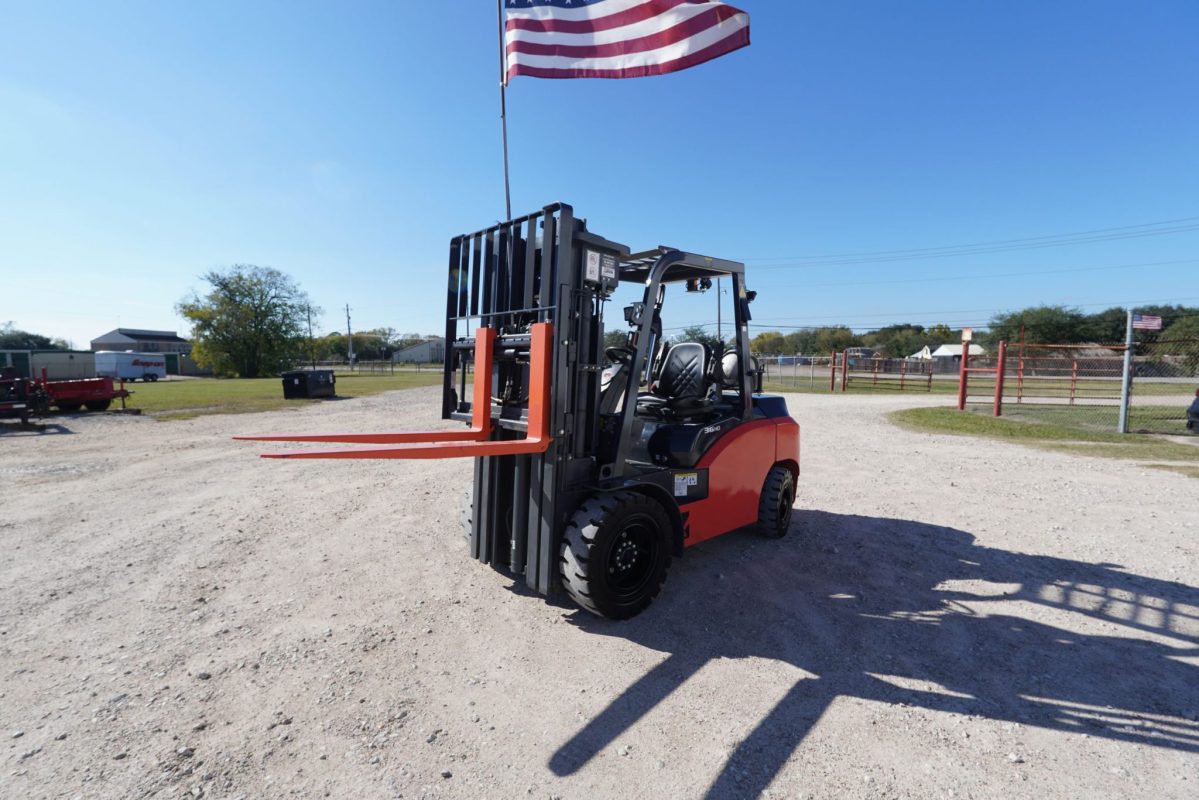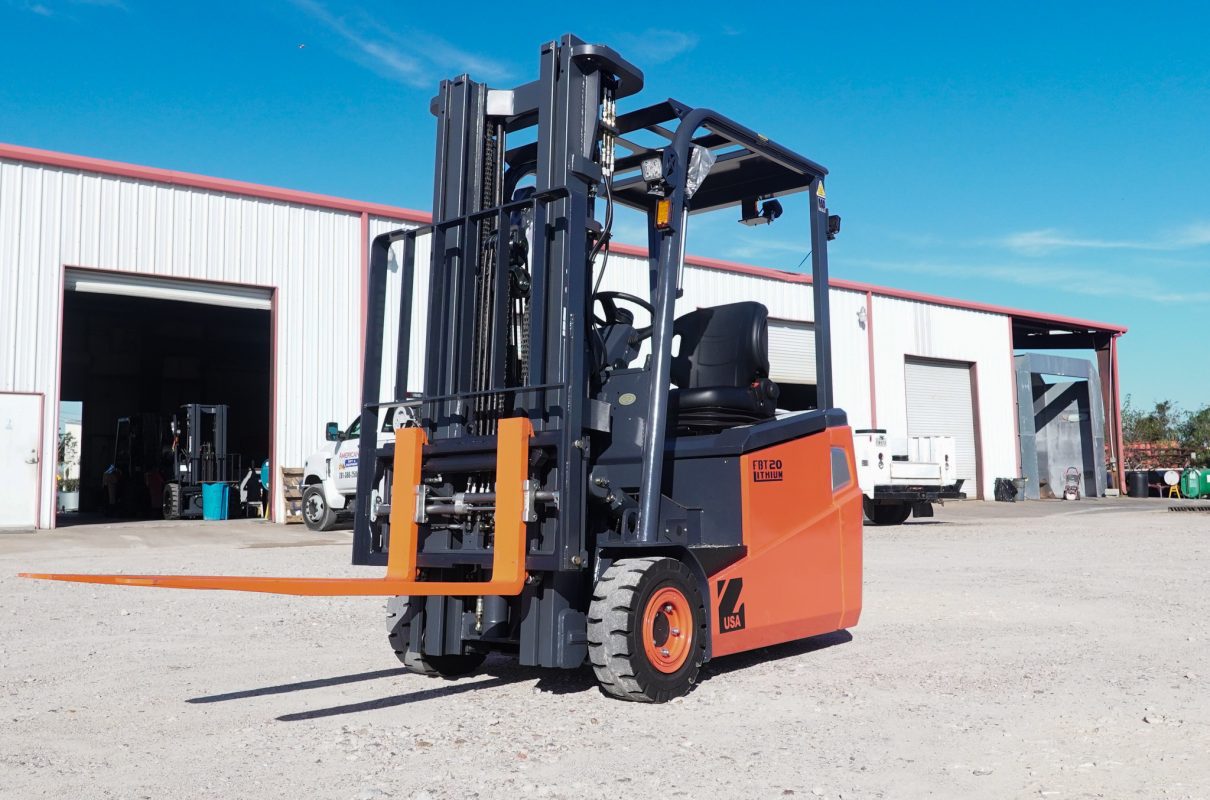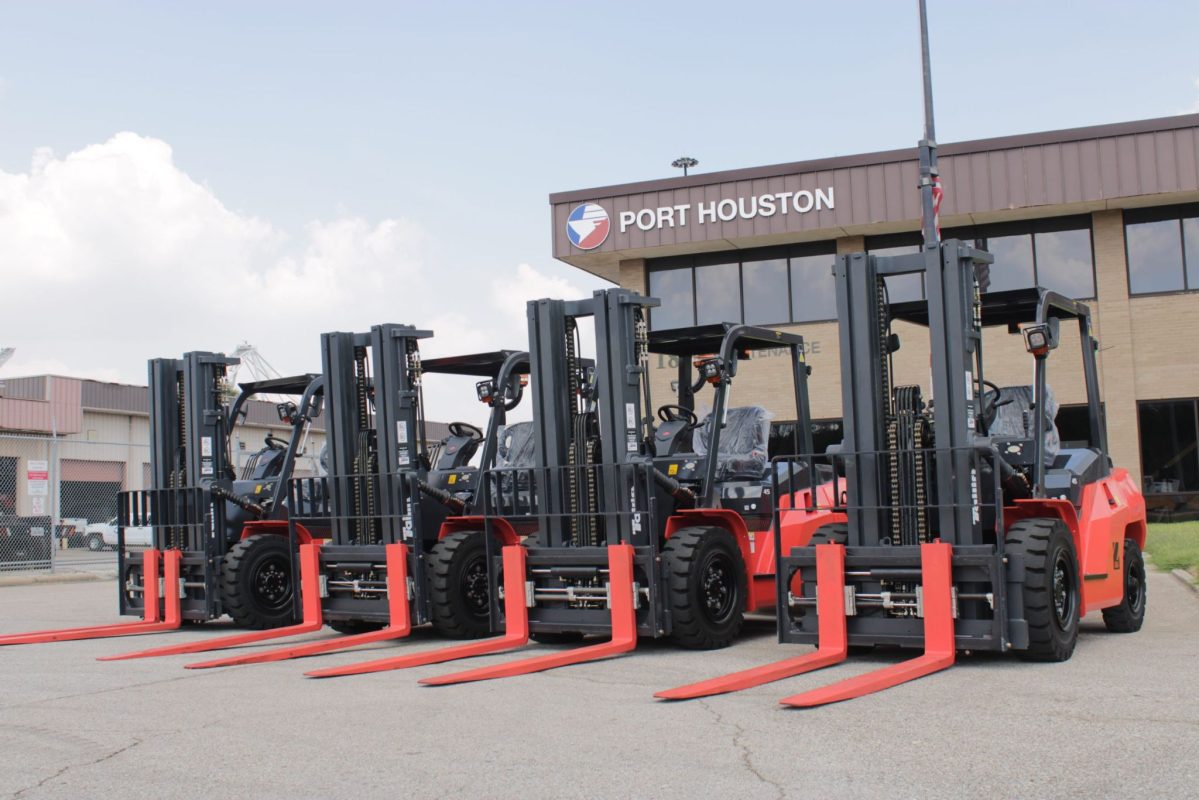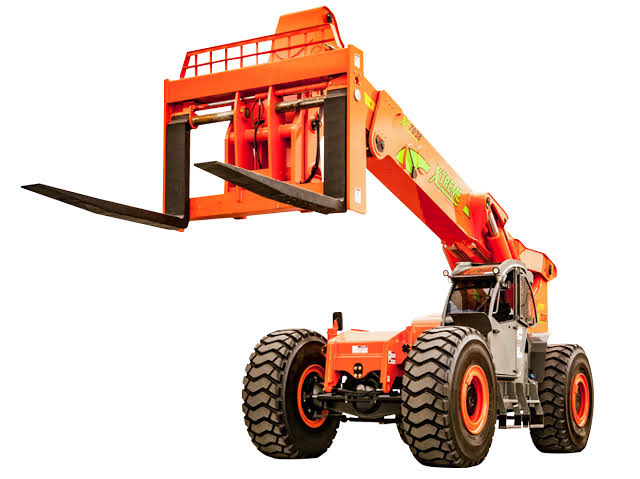
A forklift that almost reaches the top beam is an expensive surprise, and we see it often. A warehouse adds a few rack levels to gain storage, the new racking goes up, and the truck that handled the old layout can’t place a pallet on the top level. Receiving backs up, putaway slows down, and a project meant to save space starts costing time.
Checking the numbers before you buy or rent avoids that. Here is how we walk customers through forklift lift height requirements for high-rack storage.
Start With the Top Beam, Not the Rack Drawing
The overall height of the rack is not the number that matters. Measure from the floor to the top of the highest load beam where a pallet will actually rest. Then add the height of your tallest loaded pallet, plus several inches of clearance so the load can clear the beam before it is lowered into place.
That total is the fork height your truck has to reach. Compare it to the manufacturer’s maximum fork height, not the overall mast height, since the two are easy to mix up. Measure your real pallets, too. Overhang, shrink wrap, and stacked product can add inches the plan did not account for.
Know the Mast Terms Before You Compare Models
Spec sheets use a few terms that change how a truck performs in your building:
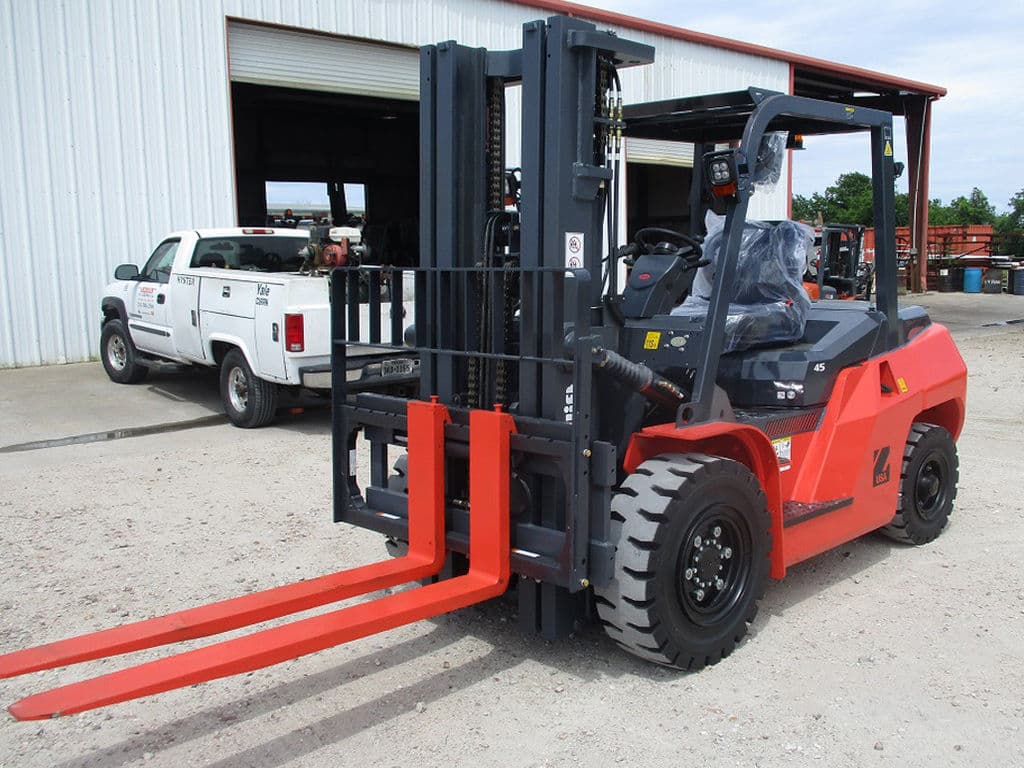
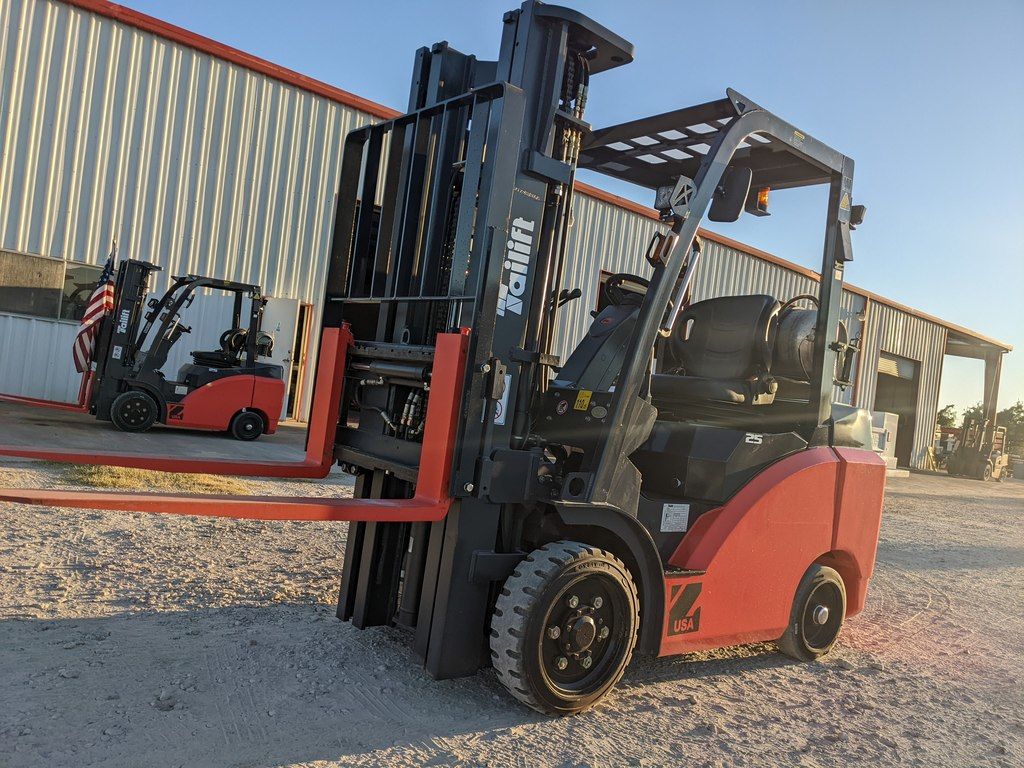
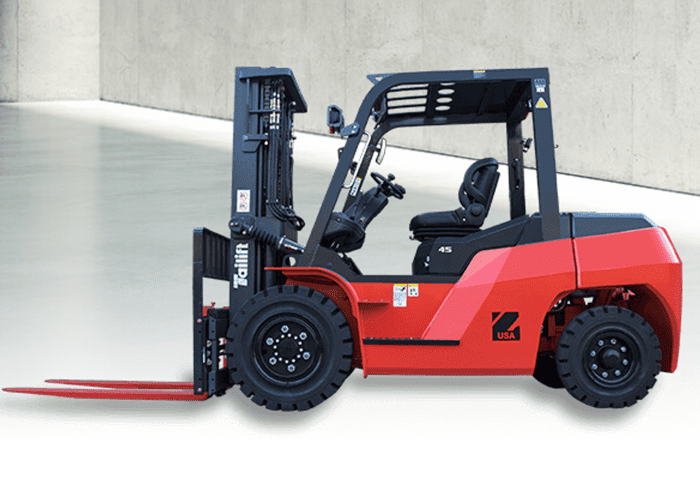
- Mast type: Two-stage (duplex) masts suit moderate heights. Three-stage (triplex) masts reach higher while keeping the collapsed height lower.
- Lowered height: How tall the truck is with the mast down. This decides whether it fits through dock doors and into trailers.
- Extended height: The overall height with the mast fully raised. This has to clear sprinklers, lighting, and ductwork.
- Free lift: How far the forks can rise before the mast starts to grow taller. It matters under low doors and inside trailers.
A truck that reaches the top beam but can’t pass through your dock door has only moved the problem.
Capacity Drops as Height Goes Up
This is where many buyers get caught. A truck rated for 5,000 pounds at a standard load center does not necessarily carry 5,000 pounds at 20 feet. As the forks rise, the mast flexes more and the truck becomes less stable, so residual capacity at height is lower. Attachments such as sideshifters and fork positioners reduce it further.
That is why forklift lift height requirements can change quickly once weight is part of the picture. Ask for the capacity at your specific fork height, with the attachments you plan to use, and confirm it against the truck’s data plate. If your heaviest pallets go to the top levels, that figure may rule out a model that looked right on paper. Visibility matters at height, too. Cameras and height indicators help operators place loads accurately and reduce product damage.
Check the Building Around the Rack
Your lift height needs do not stop at the rack. Look at what surrounds it:
- Sprinkler clearance: Fire codes typically call for open space below sprinkler heads commonly 18 inches. Confirm the requirement with your local authority.
- Aisle width: Counterbalance trucks need more room to turn than reach trucks, and narrow aisles may call for a different truck type altogether.
- Floor condition: A slightly uneven floor becomes noticeable at height and can cause the load to sway.
- Power choice: For enclosed warehouses with heavy daily use, many buyers look at electric forklifts Houston operations rely on for quiet, low-emission indoor work. The mast still has to match the racking.
Why Local Support Changes the Outcome
Specs on paper only go so far. At American Lift & Equipment, Inc., we visit the warehouse, measure the beams, and look at the pallets you actually handle. That hands-on step catches problems a quote request form can’t.
Large corporate dealers often route a request through several departments before anyone looks at your building. We are a local forklift dealer in Houston, TX, so you deal with the people who answer for the equipment. Sales, parts, and service sit under one roof, which means fewer handoffs and faster response when questions come up.
We are the authorized Tailift-USA dealer serving the Houston area. Tailift trucks are backed by Toyota Industries Group engineering, and our master mechanics know them well. We also keep parts stocked locally, so a sourcing delay is less likely to leave a truck idle while a part ships from another state.
If your racking is still going in, or volume spikes seasonally, a forklift rental Houston option lets you test a truck in your own aisles before you commit to a purchase. We can offer same-week availability when units are in stock.
Frequently Asked Questions
How high can a standard warehouse forklift lift?
Many counterbalance forklifts with standard masts reach roughly 12 to 16 feet, and triplex masts can go to 20 feet or more. Reach trucks and narrow-aisle models go higher. The right choice depends on your top beam height, load weight, and aisle width.
Does a taller mast reduce lifting capacity?
In most cases, yes. Residual capacity falls as fork height increases, and attachments lower it further. Check the data plate for the figure at your specific height.
Can I test a forklift in my facility before deciding?
Yes. We can schedule a demo so you can check clearances, visibility, and handling at full fork height in your actual aisles.
What measurements should I bring to a quote request?
Top beam height, tallest pallet height and weight, aisle width, dock door height, and any overhead obstructions such as sprinklers, lights, or ducts. Those five details let us narrow the options quickly.
Conclusion
Matching a truck to your racking takes more than comparing brochure heights. Measure the top beam, account for load height and clearance, check residual capacity, and confirm the truck fits the building around it. Getting forklift lift height requirements right up front helps reduce delays and costly rework later.
At American Lift & Equipment, Inc., we would rather walk your warehouse with you than guess from a drawing. Request a quote, schedule a demo, or speak with a local equipment expert on our team. You can also explore equipment options online or contact the team at (281) 388-2500 to talk through your racking plan.